
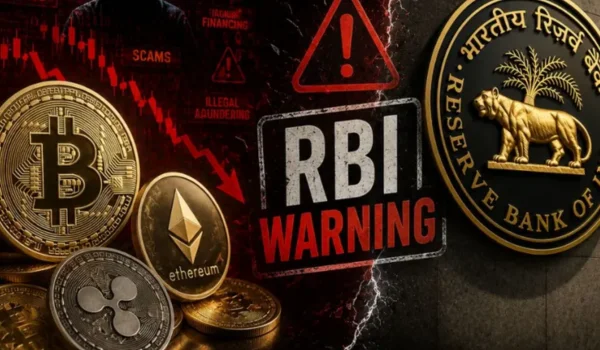
The Reserve Bank of India (RBI) and cryptocurrencies have had a complex relationship over the years. While the RBI has consistently warned about the risks of private cryptocurrencies like Bitcoin and Ethereum, cryptocurrency trading is not banned in India. Investors can legally buy, sell, and hold crypto, but they must follow tax and regulatory requirements.
In this guide, we’ll explain the RBI’s stance on cryptocurrency and the latest rules in India for 2026.
RBI’s Position on Cryptocurrency
The RBI has repeatedly expressed concerns about private cryptocurrencies, citing risks such as:
- Financial stability
- Money laundering
- Terror financing
- Consumer protection
- Volatility in crypto prices
- Impact on India’s monetary system
The RBI has also stated that cryptocurrencies are not legal tender in India and should not be treated as a replacement for the Indian Rupee.
Is Cryptocurrency Banned by RBI?
No.
The RBI does not ban individuals from buying or selling cryptocurrencies. However, it does not recognize cryptocurrencies as official currency.
In 2018, the RBI directed regulated banks not to provide services to crypto businesses. In 2020, the Supreme Court of India set aside that restriction, allowing banks to provide services to compliant crypto exchanges again.
RBI vs Government: What’s the Difference?
Many people confuse the RBI’s views with the Government of India’s policies.
| RBI | Government of India |
| India’s central bank | Makes laws and tax policies |
| Warns about crypto risks | Taxes crypto under VDA rules |
| Does not recognize crypto as legal tender | Allows trading subject to applicable laws |
| Promotes the Digital Rupee (e₹) | Regulates taxation and compliance |
Current Crypto Rules in India
Although India does not yet have a dedicated cryptocurrency law, the following rules apply:
- Crypto trading is permitted.
- Profits from Virtual Digital Assets (VDAs) are taxed at 30%.
- 1% TDS applies to specified crypto transfers.
- Crypto exchanges must comply with KYC, AML, and FIU-IND requirements.
- Investors must report crypto income while filing their Income Tax Return (ITR).
RBI and the Digital Rupee (e₹)
The RBI supports the Digital Rupee (Central Bank Digital Currency or CBDC), which is completely different from Bitcoin or other cryptocurrencies.
Digital Rupee
- Issued by the RBI
- Official legal tender
- Backed by the Government of India
- Same value as the Indian Rupee
Cryptocurrency
- Created by private blockchain networks
- Not backed by the RBI
- Prices depend on market demand
- Not legal tender
Has the RBI Changed Its View?
The RBI continues to express concerns about private cryptocurrencies and has recently reiterated that they could pose risks to the financial system. It has reportedly supported stricter regulation or even prohibition of certain crypto-related activities by banks, although no nationwide ban on individual crypto ownership or trading has been introduced.
What Does This Mean for Investors?
If you invest in cryptocurrency in India:
- You can legally buy, sell, and hold crypto.
- Use only reputable and compliant exchanges.
- Complete KYC verification.
- Report crypto income in your ITR.
- Pay applicable taxes.
- Stay updated on future regulatory changes.
FAQs
Is cryptocurrency legal in India?
Yes. Cryptocurrency trading and investment are legal, but cryptocurrencies are not legal tender.
Does the RBI support Bitcoin?
No. The RBI has consistently warned about the risks associated with private cryptocurrencies and does not recognize Bitcoin as legal currency.
Can banks allow crypto transactions?
Yes. Banks can provide services to compliant crypto businesses and customers, subject to applicable regulations following the Supreme Court’s 2020 judgment.
What is the difference between Bitcoin and the Digital Rupee?
Bitcoin is a decentralized cryptocurrency created by a private blockchain network. The Digital Rupee (e₹) is India’s official central bank digital currency issued and backed by the RBI.
Conclusion
The RBI and cryptocurrencies have different roles in India’s financial system. While the RBI continues to caution against private cryptocurrencies and supports the Digital Rupee (e₹) as the country’s official digital currency, cryptocurrency trading remains legal under the current framework. Investors should understand that crypto is not legal tender, comply with tax and reporting obligations, and stay informed as India’s regulatory framework continues to evolve.