
If you’ve used different hand dryers across places, you’ve probably noticed something without really thinking about it. Some start instantly and feel smooth. Others take a second, or stop midway, or just don’t respond the way you expect.
That difference usually isn’t about the outer design. It comes down to how the sensing system works inside.
A modern hand dryer is no longer just pushing air. A lot of what you experience depends on how accurately it detects and responds to your hands.
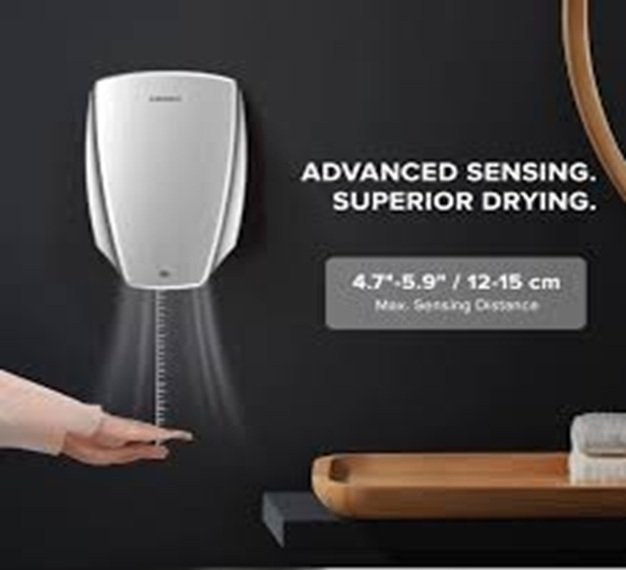
It’s Not Just “On and Off.” Anymore
At a basic level, sensors turn the unit on and off. That’s the obvious part.
But in a high-traffic washroom, that small function starts to matter more than expected.
An automatic hand dryer that responds even slightly late feels unreliable. People pull their hands back, try again, or just leave.
It doesn’t take much. Even a short delay changes how people interact with it.
The Shift From Basic Detection to Smarter Response
Older systems were fairly simple. The sensor would trigger when something entered its range.
That worked, but not always well. Lighting conditions, angle, even quick movements could affect detection.
Newer hand dryer machine systems handle this differently. They don’t just detect presence, they respond to movement more precisely.
So instead of guessing, they react more accurately to where your hands actually are.
You don’t notice the technology directly. You notice that it just works without needing a second try.
Why Response Time Changes Everything
This is one of those things that seems small, but isn’t.
The gap between placing your hands and airflow starting used to be longer. Now it’s almost immediate in better systems.
In a quiet space, that may not matter much. In a crowded washroom, it does.
A faster electric hand dryer keeps things moving. People don’t wait, and more importantly, they don’t hesitate.
That’s what prevents small delays from turning into queues.
What Happens Under Continuous Use
This is where real performance shows up.
In actual environments, especially places like malls or airports, dryers are used constantly. One after another, with barely any break.
Lower-quality systems tend to show problems here. Sensors become inconsistent. Sometimes they respond late, sometimes they cut off early.
A well-built automatic hand dryer doesn’t change behavior under load. It keeps responding the same way, even after repeated use.
That consistency is what separates something that “works” from something that actually performs.
Sensors and Airflow Are More Connected Than They Seem
This part is usually not talked about much.
People think airflow is separate, but it’s not. Sensors control when and how that airflow is delivered.
If detection is accurate, airflow starts exactly when needed and stays stable.
If not, the drying process feels uneven. It starts late, stops early, or fluctuates in between.
In better hand dryer machine systems, both are tuned together. That’s why some units feel smooth, while others don’t.
Energy Use Is Also Controlled Here
One thing that doesn’t get much attention is how sensors affect energy use.
Older systems could run longer than needed, or activate when not required.
Newer electric hand dryer units are more precise. They start only when needed and stop immediately after.
It’s a small change per use, but across hundreds of uses a day, it adds up.
Hygiene Is Part of the Equation
Touch-free operation isn’t new anymore, but it still matters.
An automatic hand dryer removes the need to press anything. That reduces shared contact points.
In places like hospitals or public facilities, that becomes more important than people usually think about.
The World Health Organization has already pointed out how proper hand hygiene helps reduce infection spread. Reducing touchpoints supports that in a practical way.
Where These Differences Start Showing Clearly
You notice the impact more in places where usage is high.
Airports, where everything needs to move quickly.
Malls, where there’s constant footfall.
Office spaces, where systems are expected to just work without interruption.
Hospitals, where reliability matters more than anything else.
Even colleges, where maintenance needs to stay simple.
When Sensor Systems Don’t Work Well
Not every system gets this right.
Some take too long to respond.
Some stop midway through use.
Some trigger when no one is using them.
And some just don’t detect properly unless you adjust your hand position.
These issues don’t show up immediately. They become obvious only after regular use.
What Actually Matters When Choosing One
Instead of focusing only on speed or design, it helps to look at how the system behaves.
A good hand dryer should respond instantly, maintain airflow, and stop cleanly after use.
A reliable automatic hand dryer should behave the same way throughout the day, not just when it’s new.
And a well-designed hand dryer machine should feel consistent, not unpredictable.
Final Thoughts
Modern hand dryer systems have changed more on the inside than the outside.
Sensor technology now controls how quickly the unit responds, how efficiently it dries, and how consistently it performs over time.
You don’t really notice it when it works well. But the moment it doesn’t, it becomes obvious.
Whether it’s an automatic hand dryer or a high-speed electric hand dryer, the difference often comes down to how well the sensing system is built.
Because in high-traffic environments, even small inconsistencies don’t go unnoticed for long.