
An affidavit is a legal document in which a person makes a written statement of facts under oath or affirmation. It is commonly used in courts, government offices, banks, educational institutions, and various legal proceedings as proof of certain facts or declarations.
In India, affidavits are widely used for name changes, address proof, marriage declarations, property matters, income certificates, passport applications, and many other official purposes.
This guide explains what an affidavit is, its format, types, uses, required documents, and how to make one.
What Is an Affidavit?
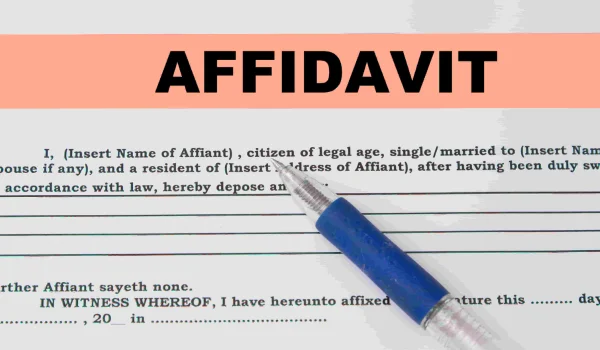
An affidavit is a written declaration made voluntarily by a person (called the deponent) stating that the information provided is true to the best of their knowledge. The affidavit is signed by the deponent and is usually attested by a Notary Public, Oath Commissioner, or another authorized authority.
Making a false statement in an affidavit may have legal consequences under Indian law.
When Is an Affidavit Required?
Affidavits are commonly required for:
- Name change
- Address proof
- Date of birth correction
- Marriage declaration
- Income declaration
- Property disputes
- Court cases
- Lost documents
- Passport applications
- Educational certificate corrections
- Vehicle ownership declarations
- Bank-related matters
Types of Affidavits in India
Some common types include:
- Name Change Affidavit
- Address Affidavit
- Marriage Affidavit
- Income Affidavit
- Affidavit for Lost Documents
- Affidavit for Date of Birth
- Property Affidavit
- Affidavit for Gap in Education
- Identity Affidavit
- Joint Affidavit
Standard Affidavit Format
A typical affidavit includes the following details:
| Section | Details |
| Title | Affidavit |
| Name of Deponent | Full name |
| Father’s/Husband’s Name | As applicable |
| Age | Applicant’s age |
| Address | Full residential address |
| Statement of Facts | Declaration made under oath |
| Verification | Confirmation that the contents are true |
| Signature | Deponent’s signature |
| Date & Place | Date and location |
| Attestation | Signature and seal of Notary/Oath Commissioner |
How to Make an Affidavit
Step 1: Draft the Affidavit
Prepare the affidavit clearly, mentioning:
- Your full name
- Address
- Purpose of the affidavit
- Facts being declared
Use simple and accurate language.
Step 2: Print on Appropriate Paper
Depending on your state’s rules and the purpose of the affidavit, it may need to be printed on non-judicial stamp paper of the prescribed value or plain paper where permitted.
Step 3: Sign the Affidavit
The deponent should sign the affidavit in the presence of the authorized official.
Step 4: Get It Attested
Visit a:
- Notary Public
- Oath Commissioner
- Judicial Magistrate (where required)
The authority will verify your identity and attest the affidavit.
Documents Required
Generally, you may need:
- Aadhaar Card
- PAN Card
- Passport
- Voter ID
- Driving Licence
- Passport-size photographs
- Supporting documents related to the affidavit’s purpose
Additional documents may be required depending on the nature of the declaration.
Is a Notary Required?
For many purposes, yes. A notary or another authorized official certifies that the affidavit has been signed voluntarily by the deponent.
However, some authorities may require affidavits to be sworn before a Judicial Magistrate or another designated authority instead of a notary. Always check the specific requirement of the organization requesting the affidavit.
Common Mistakes to Avoid
- Providing false information
- Using incorrect personal details
- Not signing before the authorized official
- Missing supporting documents
- Using the wrong stamp paper where required
- Forgetting the verification clause
FAQs
Is an affidavit a legal document?
Yes. An affidavit is a legally recognized document containing a sworn statement of facts.
Can I write my own affidavit?
Yes. You can draft your own affidavit, but it should follow the required format and be attested by the appropriate authority if required.
Is stamp paper mandatory?
Not always. The requirement depends on the purpose of the affidavit and the applicable state laws or departmental rules.
What happens if someone files a false affidavit?
Submitting false information in an affidavit can lead to legal consequences, including prosecution for making false statements, depending on the circumstances.
Conclusion
An affidavit is one of the most commonly used legal documents in India for declaring facts before courts, government departments, banks, and educational institutions. Whether you need it for a name change, property matter, marriage declaration, or lost documents, preparing it in the correct format and getting it properly attested is essential. Before submitting an affidavit, always verify the specific requirements of the authority requesting it, as the format, stamp paper, and attestation requirements may vary depending on the purpose and state.