
There is a generational habit change hiding inside India’s rental furniture market, and it has very little to do with technology. It has to do with how long people expect to stay in one place. That shift is the backdrop to the interest around the Rentomojo IPO, and NE Now readers who have watched young professionals move between cities for work will recognise the pattern immediately.
The Twelve-Month Life
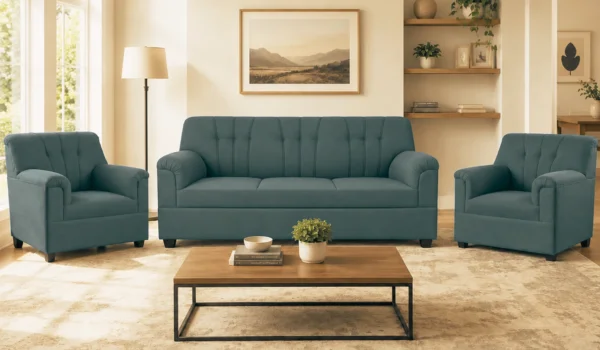
A software engineer takes a role in Bengaluru. She signs an eleven-month rental agreement, because that is the standard tenancy in most Indian cities. Within two years there is a strong chance she changes employers, changes neighbourhoods, or moves to another city entirely.
Now ask her to buy a refrigerator, a washing machine, a double bed, a wardrobe and a sofa. The purchase cost is significant, but that is not the real deterrent. The real deterrent is the moving cost — dismantling, packing, transporting, damage, and the miserable resale market where furniture bought two years ago fetches a fraction of its price.
Ownership is not just expensive for this person. It is actively inconvenient.
That single word — inconvenient — is what turned a niche service into a category. Anyone reviewing the upcoming ipo pipeline for consumer-facing businesses will notice that durable rental models are built on removing hassle rather than on undercutting the price of ownership, which is a far stickier proposition.
What Renting Replaces
Subscription rental converts that entire problem into a monthly line item. Delivery, installation, maintenance, relocation and eventual return all sit with the provider. When the tenant moves, the furniture goes back or moves with them through the same operator.
The proposition is not primarily about affordability. Plenty of customers could buy outright and choose not to. They are buying flexibility and the elimination of hassle — which is a different product entirely and, importantly, one that people are willing to keep paying for month after month.
The Categories That Work And The Ones That Do Not
Rental economics favour goods with three characteristics: high upfront cost, long physical life, and low emotional attachment. Appliances and large furniture score well on all three.
Items that fail the test tend to be personal, cheap, or fashion-driven:
- Works well — refrigerators, washing machines, beds, wardrobes, dining sets, air conditioners, televisions
- Works poorly — decor, small kitchen items, anything customers want to personalise permanently
- Works conditionally — laptops and electronics, where obsolescence outpaces physical wear
The Business Behind The Convenience
What the customer experiences as a simple monthly plan is, operationally, a fairly demanding machine:
- Procurement at volume discounts that individual buyers cannot access
- Warehousing near demand centres to enable quick delivery
- Last-mile logistics including assembly at the customer’s home
- Service and repair networks to keep assets functional
- Refurbishment between customers so a returned item can be redeployed
- Recovery and collections for a subscription that must be billed monthly
Each of these is a cost centre. The revenue is a modest monthly rental. The entire model depends on stretching each asset across enough rental cycles to comfortably exceed its purchase cost.
The Demographic Tailwind
India’s urban rental housing demand keeps expanding as employment concentrates in a handful of metropolitan clusters. Every new tenant household is a potential furnishing decision, and an increasing share of those households treat their current city as temporary.
Add to this the rise of managed co-living, which furnishes rooms at scale, and corporate relocation programmes that set up homes for transferred employees. Both create bulk demand with far lower acquisition cost per asset than individual retail customers.
The Honest Counterweight
Rental models carry real vulnerabilities. Customer churn shortens asset life cycles. Damage and non-return create losses. Cash flows arrive slowly while the capital to buy inventory leaves quickly. And a slowdown in urban hiring reduces exactly the mobility that generates demand.
The businesses that endure in this category tend to be the ones that treat themselves as asset managers first and consumer brands second — obsessive about utilisation rates, refurbishment quality and how many times a single sofa can find a new home before it stops earning. That unromantic discipline, rather than any marketing campaign, is what makes renting a sofa a viable industry at all.